The potential of collaborative energy management systems for more sustainability in European industrial parks
The implementation of renewable and innovative storage technologies
Energy regulation with controllable consumers and producers
New technologies in the field of digitalization and cybersecurity
Revolutionizing Energy Management Solutions with Federated Learning (AI)
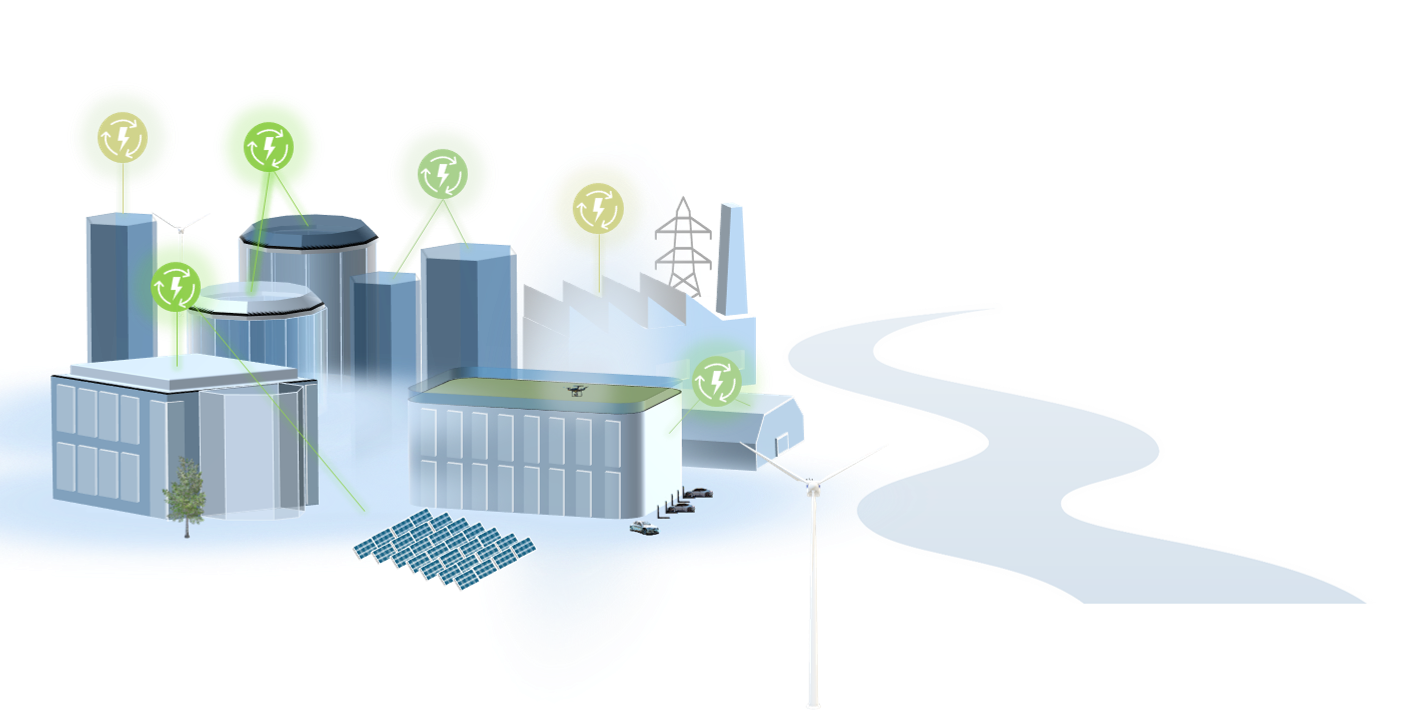
FLEX-E supports the transition to collaborative, intelligent energy management systems
Industrial parks are major consumers of energy. Within these parks, however, each company typically manages its energy independently. This can lead to situations where one company wastes solar energy while a neighbor draws expensive electricity from the grid. Others operate machinery simultaneously, causing costly consumption peaks. Without coordination, valuable energy is wasted, costs rise, and CO2 emissions increase. In the face of rising energy prices and more ambitious climate targets, this approach is no longer sustainable.
With its numerous industrial areas, energy-intensive companies, and small and medium-sized enterprises (SMEs), the Upper Rhine region offers significant potential to become a model region for improving the energy efficiency and competitiveness of businesses through collaborative industrial parks equipped with energy management systems

Sharing resources and data to improve energy efficiency in industrial parks
The FLEX-E project aims to help companies act together as one large intelligent system while keeping their sensitive consumption data private. The project uses innovative artificial intelligence tools based on federated learning. Instead of pooling data, each site trains its own model and shares only the lessons learned to create a collective model that enables global energy optimization.

Ensuring security and privacy aspects to secure acceptance among users and operators
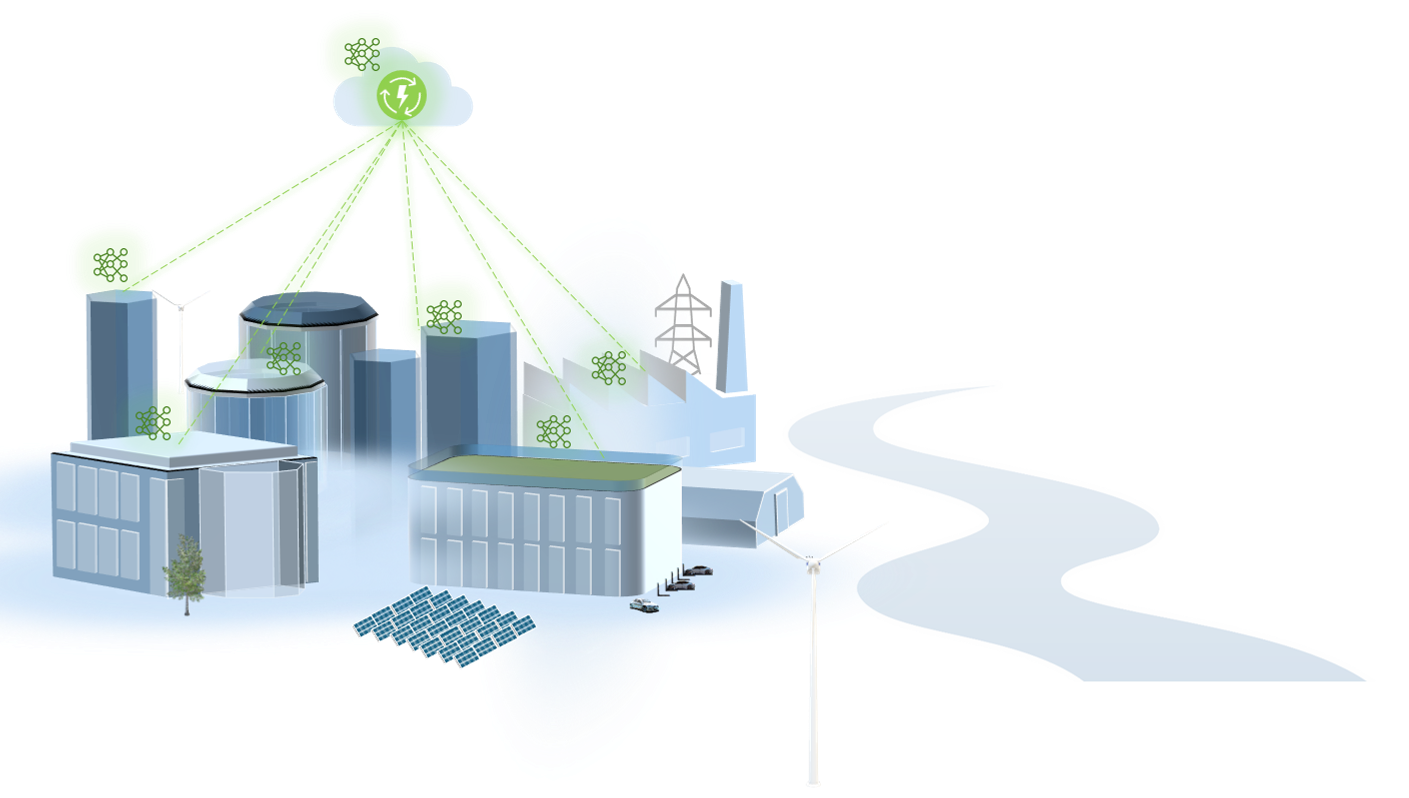
The collaborative framework to be developed implements central energy strategies for industrial parks through decentralized, flexible energy management. Local energy consumers and producers within an industrial park – such as building energy systems, PV systems, wallboxes, or other energy-related installations – become part of a machine-learning-based energy management system, without their sensitive consumption and generation data ever leaving their own site. Only parameters or changes to the underlying models are transmitted – never the raw data itself. This ensures that data privacy is maintained at all times.

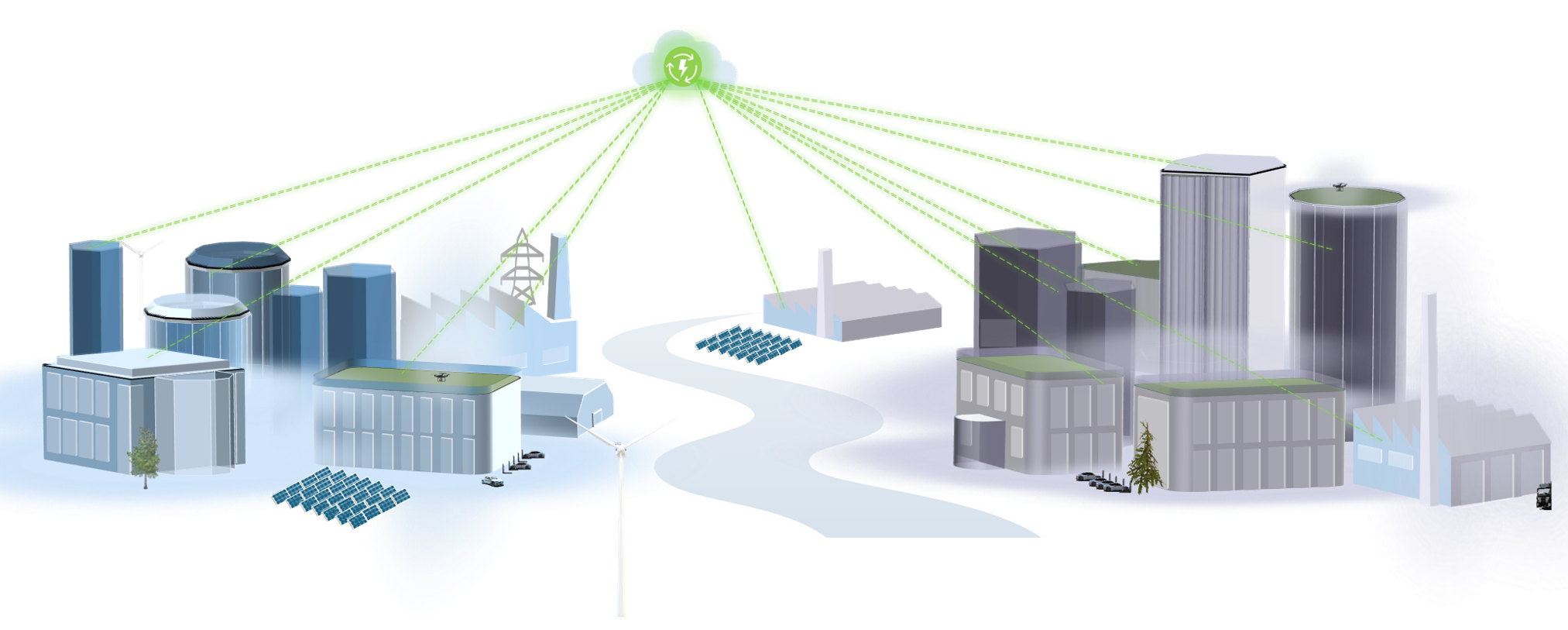
Modularity and scalability for changes in industrial parks and for networking multiple parks
The project holds substantial potential. Thanks to its modular architecture, it can be flexibly adapted to changes in individual industrial parks and equally scaled to network multiple parks together. This enables companies to use energy more efficiently, reduce costs, and increase their competitiveness – while at the same time creating a Europe-wide scalable model that transforms fragmented energy management into collective intelligence.

Transfer through practical guides, software tools, and workshops
The project outcomes include a practical software toolkit and a guideline for modeling energy flows. These tools will make it easier for other industrial parks to apply the same methods and benefit from the results. The transfer to further industrial parks in the Upper Rhine region and at a national level will be driven by a binational, complementary consortium.

AI tools are tested and validated in real-world industrial parks
Selected sites in the Upper Rhine region serve as test areas to demonstrate how AI-driven coordination can improve efficiency and flexibility. By comparing sites of different sizes, the project will verify how flexible energy management can be adapted to a wide variety of industrial contexts.
The FLEX-E project is an initiative of the Science Offensive of the Trinational Metropolitan Region of the Upper Rhine, co-funded by the European Union through the Interreg Upper Rhine program, the Grand Est Region, the Ministry of Science, Research and Arts Baden-Württemberg, and the Ministry of Science and Health of Rhineland-Palatinate
FLEX-E Work Packages
WP 1 Project Coordination
Project coordination comprises various activities such as project management, project monitoring, quality assurance, and acting as the interface to the managing authority.
Lead: Karlsruhe University of Applied Sciences
WP 2 Project Communication
Communication measures covering the transfer between project partners, to companies, other institutional actors, and the general public.
Lead: Karlsruhe University of Applied Sciences
WP 3 Technical-Physical Energy Flow Modeling in Industrial Parks
Modeling of energy flows to generate synthetic data used for training AI models of entities as well as for federated learning frameworks to map energy strategies.
Lead: Karlsruhe University of Applied Sciences
WP 4 Development of the Core Federated Learning Framework System
Energy strategies and the behavior of the energy system are subsequently implemented in a federated learning cloud application. This WP includes the conception and development of a federated learning framework, consisting of AI models for local entities and local networks with interfaces to the central cloud network.
Lead: INSA Strasbourg
WP 5 Security and Explainability in the Federated Learning Framework
Assessment and analysis regarding the security and explainability of the federated learning framework. Understanding the behavior of neural networks provides insights into the extent to which potential attackers can analytically deduce the operating states of installations based on network weights.
Lead: INSA Strasbourg
WP 6 Knowledge Transfer to Transfer Beneficiaries
Analyzing energy and power flows in selected industrial parks in cooperation with partners along the Upper Rhine, and developing consumer and producer behavior profiles as well as various energy optimization strategies based on synthetic data. The FL energy flow optimization will be demonstrated in test fields, and a comparison with real-world energy flows will be drawn to provide a reliable statement on the accuracy of the methodology.
Lead: Karlsruhe University of Applied Sciences